OutSystems ODC Offline Data Sync: A Game-Changer for Mobile Development
The September 2025 announcement from OutSystems that introduces Offline Data Sync for OutSystems Development Cloud (ODC), marks a major shift in how mobile apps are built with ODC. This feature brings simplicity, performance, and flexibility to offline-first development. Here’s what makes ODC different now:
1. Built-In Offline Data Sync
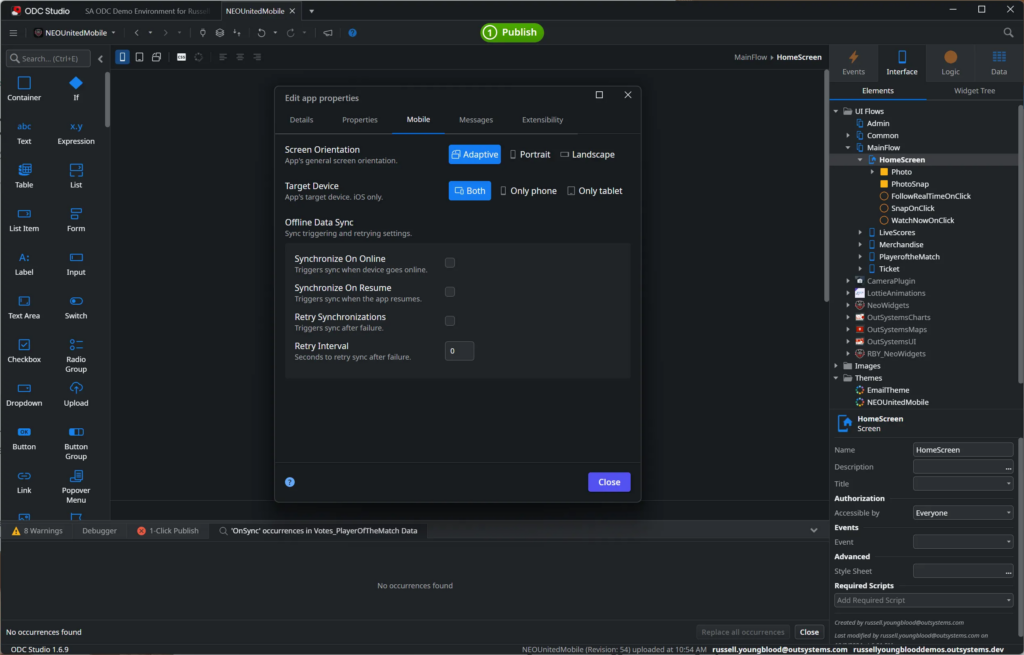
Gone are the days of manually implementing offline capabilities with UI components and custom logic. With this update, ODC Studio provides a native mechanism to sync database entities with local storage entities.
What does this mean for developers?
- No need for extra UI modules to enable offline functionality.
- Synchronization is now handled through a system-level event (OnSync), making it easier to trigger and manage sync flows.
2. True Offline-First Architecture
ODC now supports a robust offline-first approach:
- Mobile apps can store data locally in SQLite (or IndexedDB for PWAs), ensuring full functionality even without network connectivity.
- When connectivity returns, changes sync automatically or via configured triggers. This is a huge win for scenarios like field service, remote work, and poor connectivity environments, all without complex customizations.
3. Unified Development Experience
Developers can build once and deploy everywhere:
- Use the same code base for mobile apps and PWAs.
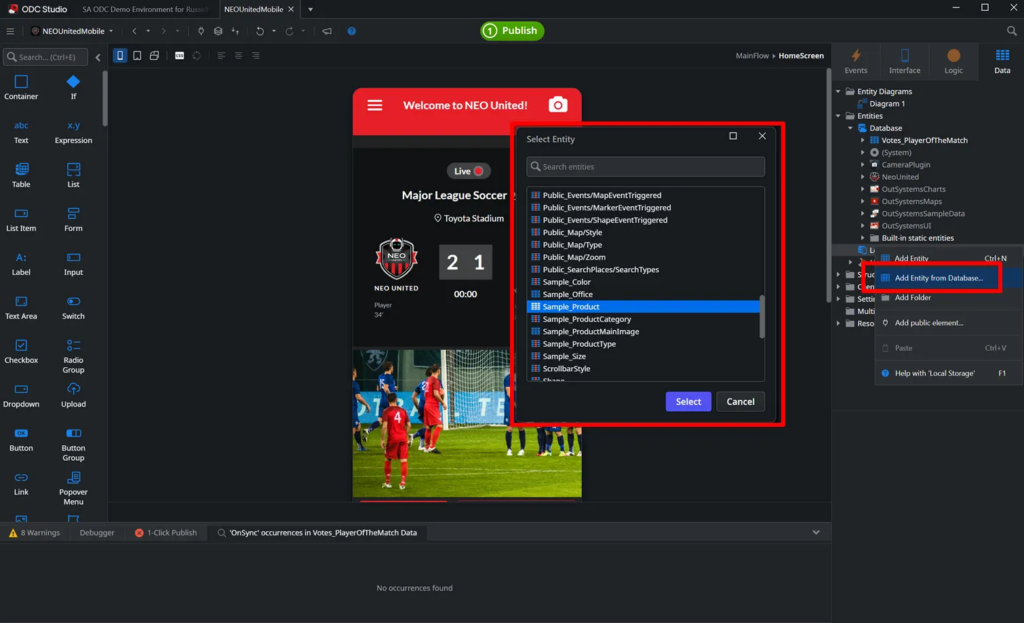
- Built-in accelerators let you copy server entities into local storage and auto-generate sync actions, dramatically reducing development time.
4. Performance and Reliability
Offline sync is optimized for speed and efficiency:
- Incremental updates and selective data synchronization improve responsiveness and reduce payload size.
- Best practices like granular sync, delta updates, and lightweight local models are supported out-of-the-box.
Key Difference from Before
Before this feature, offline support required manual setup, custom events, and UI dependencies. Now, offline sync is a native capability, making ODC a stronger platform for offline-first mobile development, comparable to modern enterprise-grade mobile frameworks.
ODC Mobile Development: Before vs After Offline Data Sync
Checklist: Enabling Offline Sync in ODC Mobile Apps
- Enable Offline Sync in ODC Studio:
- Mark entities as Offline Capable.
- Configure local storage entities automatically.
2. Define Sync Triggers:
- Use OnSync system event for custom logic.
- Decide between automatic or manual sync.
3. Optimize Data:
- Sync only required entities (avoid full datasets).
- Use delta updates for performance.
4. Handle Conflicts:
- Implement conflict resolution logic (last-write-wins or custom).
5. Test Offline Scenarios:
- Simulate network loss and verify app behavior.
6. Deploy & Monitor:
- Ensure sync reliability in real-world conditions.
Summary:
The new Offline Data Sync feature in OutSystems Development Cloud (ODC) revolutionizes mobile app development by making offline-first capabilities native and effortless. Developers no longer need complex custom logic — ODC now provides built-in sync between server and local storage entities, powered by the OnSync system event. Apps can function fully offline using local databases like SQLite, then automatically sync changes when connectivity returns. This update also delivers a unified development experience for mobile and PWAs, optimized performance through incremental updates, and best practices like granular sync and delta updates. In short, ODC now offers a streamlined, reliable, and enterprise-grade approach to offline mobile development.
About The Author

administrator
The content on this blog is a curation of resources related to OutSystems low-code development. I am an OutSystems full-time employee, Certified Professional Developer, and Solution Architect for OutSystems.